Your tax plan shouldn’t be “set and forget.” Just as your life shifts — from studying and working your first job, through buying property, raising a family, running a business, and eventually retiring — your tax opportunities and obligations evolve too.
Below is a breakdown of smart, stage-specific tax hacks for Australians who want to make the most of every phase of life.
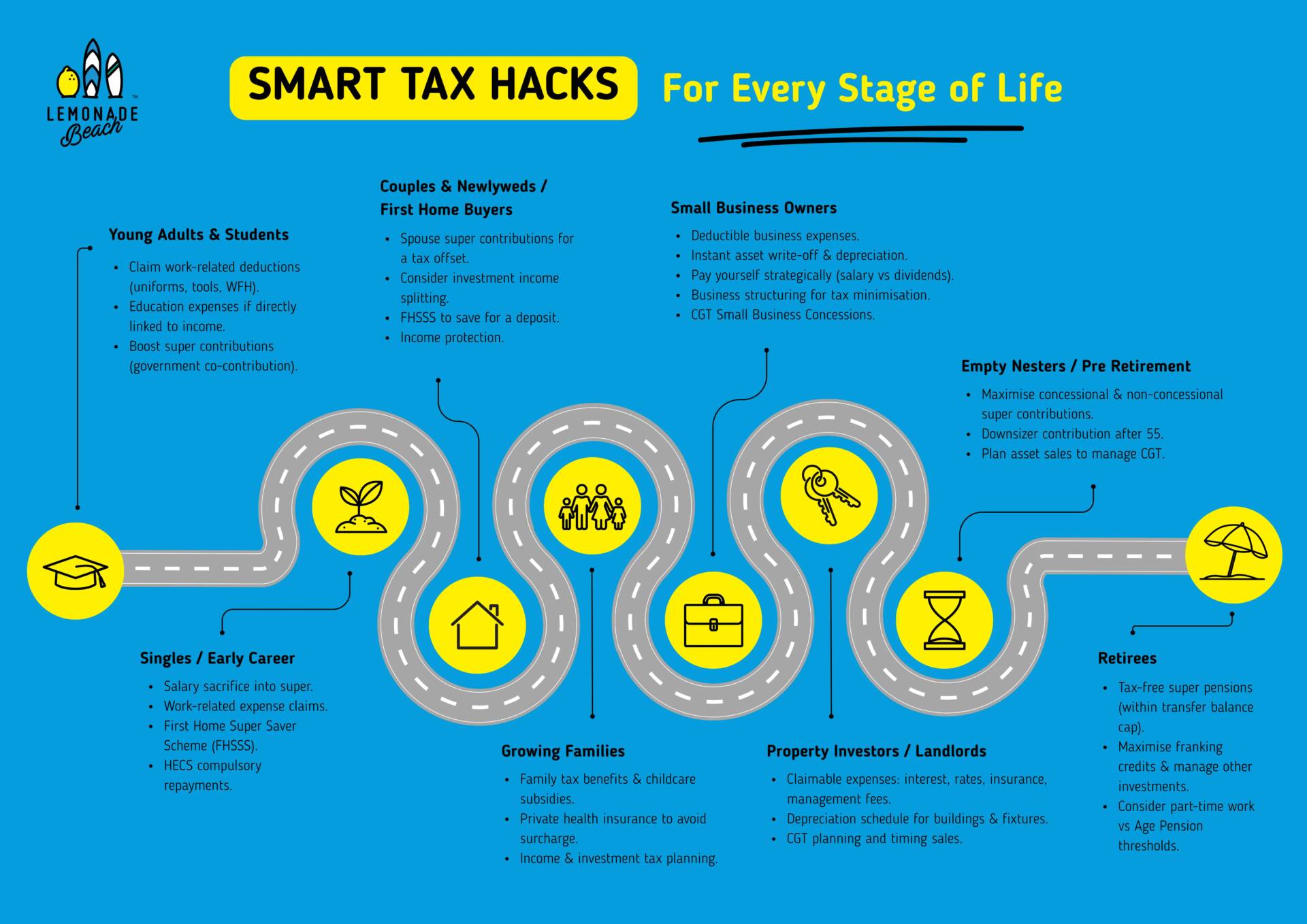
Download our Smart Tax Hacks for Every Stage of Life Infographic.
Young Adults & Students
At this stage, it’s all about starting strong and building solid money habits.
- Claiming Work Expenses – Deduct legitimate costs tied to your income, such as uniforms, tools, laptops, and even home office expenses if you’ve been studying and working from home.
- Study-Related Deductions – If your course directly links to your current role, certain education expenses may qualify as tax deductions.
- Boosting Your Super – Low-income earners may be eligible for a government co-contribution. Contribute a little to super, and the government may top it up by as much as $500 — a future-friendly bonus.
Read more Smart Tax Moves for Students and Young Professionals in Australia.
Singles & Early Career
Your early career is the perfect time to set strong financial habits that will pay off for decades. While you might not have dependents or a mortgage yet, there are still smart tax moves that can boost your savings and help you get ahead:
- Salary Sacrifice into Super – Even small amounts count. By contributing pre-tax dollars into your super, you reduce your taxable income today while building long-term wealth for tomorrow. It’s one of the easiest ways to grow your retirement savings early.
- Work-Related Expense Claims – Keep records of legitimate expenses like uniforms, professional memberships, home office costs, or tools directly related to your job. Claiming correctly (without over-claiming) means more money back at tax time.
- First Home Super Saver Scheme (FHSSS) – Planning to buy your first home? You can make voluntary contributions to your super and later withdraw them to put toward a deposit. The added bonus: you save on tax along the way, helping you reach your savings goal faster.
- HECS/HELP Loan Awareness – Once your income reaches the repayment threshold, repayments kick in automatically through your tax return. Staying aware of your loan balance and repayment obligations can help you budget and avoid surprises at tax time.
Dive deeper into Early Career Tax Strategies to Build Wealth in Australia.
Couples, Newlyweds & First Home Buyers
When you combine finances, your tax planning can become a team effort.
- Spouse Super Contributions – If your partner earns below the threshold, contributing to their super can earn you a tax offset.
- Investment Ownership – Structuring investments in the lower-earning partner’s name can reduce household tax.
- First Home Super Saver Scheme (FHSSS) – Use voluntary super contributions to fast-track your home deposit savings with tax benefits along the way.
- Income Protection – Consider income protection insurance. It’s often tax-deductible and can safeguard your finances if you’re unable to work due to illness or injury — a smart move when you’re looking to commit to a mortgage.
Dive deeper into Tax Planning Tips for Couples and First Home Buyers in Australia.
Growing Families
With dependents come new financial responsibilities — and new opportunities to save.
- Family Tax Benefits & Child Care Subsidies – Check your eligibility to reduce household costs.
- Private Health Cover – If your income pushes you above the Medicare Levy Surcharge threshold, private health insurance can save you extra tax.
- Income & Investment Tax Planning – Consider how investment ownership is structured between partners to achieve a smoother tax outcome.
Dive deeper into tax strategies for growing families.
Small Business Owners
Running your own business means your personal and business tax strategies go hand in hand.
- Business Expense Deductions – Claim business-related costs such as phones, software, advertising, and accounting fees.
- Asset Deductions – Check eligibility for asset write-offs or simplified depreciation.
- Pay Structure – Decide whether salary, drawings, or dividends are most tax-effective, and don’t forget super contributions for long-term security.
- Business Structure – Make use of different business structures to minimise tax whilst enabling business growth.
- CGT Small Business Concessions – Selling a business or assets? You may qualify for concessions that reduce, defer, or even eliminate capital gains tax, helping you keep more of your hard-earned profits.
Dive deeper into essential Tax Strategies for Australian Small Business Owners.
Property Investors & Landlords
Investment properties remain popular in Australia, but the ATO closely monitors claims.
- Claimable Costs – Deduct interest on loans, council rates, insurance, property management fees, and eligible repairs.
- Depreciation – A professional depreciation schedule can unlock thousands in deductions over time.
- Capital Gains Tax (CGT) Planning – Holding an asset for 12+ months allows access to the 50% CGT discount. Strategically offset gains with losses when possible.
Dive deeper into essential tax strategies for property investors and landlords in Australia.
Empty Nesters & Pre-Retirement
With kids moved out and retirement approaching, this is the time to fine-tune your financial position.
- Maximise Super Contributions – Use both concessional and non-concessional contributions while still earning.
- Downsizer Contribution – If you’re 55 or older, you may contribute up to $300,000 from the sale of your home into super without tax.
- Plan Investment Sales – Selling before retirement may make sense if you’re currently on a lower tax rate.
Dive Deeper into Pre-Retirement Tax Planning for Empty Nesters in Australia.
Retirees
Retirement changes how you interact with the tax system, but opportunities still exist.
- Superannuation Income Streams – Most account-based pensions are tax free in retirement (within the transfer balance cap).
- Other Income Sources – Dividends, rental income, and managed funds may still be taxable, but franking credits can improve cash returns.
- Casual or Part-Time Work – Understand how extra income affects your Age Pension and tax-free thresholds.
Dive deeper into Tax Planning Tips for Retirees in Australia.
The Bottom Line
At every stage of life, the right tax strategy can put more money back into your pocket — whether your focus is building your career, buying your first home, managing family expenses, growing a business, or enjoying retirement.
Tax rules are complex, and strategies that work for one life stage might not be suitable for another. That’s where Lemonade Beach Accounting steps in.
We work with Australians at every stage of life, helping you navigate tax rules with confidence, maximise deductions, and stay compliant.
Ready to Unlock Your Tax Hacks?
Book a Tax Planning Appointment with Lemonade Beach today. We’ll align your tax strategy with your goals — making sure your money is working as hard as you are.
Explore Tax Tips For Each Stage of Life